KEF LS50 Meta Bookshelf Speakers
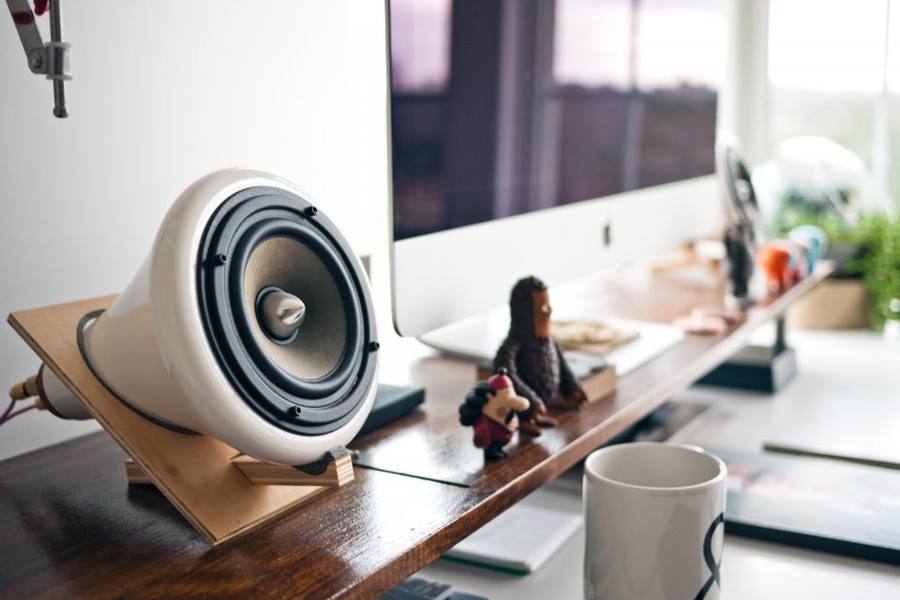
Representative image (stock photo); not the exact product.
Why A Coaxial Driver Changes Imaging
In a conventional speaker the tweeter and midrange driver are separated vertically, which means high and mid frequencies arrive from slightly different points and slightly different times depending on where you sit. The result is that the stereo image shifts as you move your head.
A coaxial driver mounts the tweeter in the centre of the midrange cone, so both radiate from the same point. The practical effect is an unusually stable and precise stereo image, and a much larger area of the room where it holds together rather than a single narrow sweet spot.
For anyone listening in a normal room rather than a dedicated listening chair, that consistency matters more than almost any other specification, and it is the reason these have the reputation they do.
The Metamaterial Absorber
Behind any tweeter, sound radiates backwards into the cabinet and some of it reflects back through the dome, adding coloration. The usual solution is damping material, which absorbs some of it.
KEF's absorber is a moulded maze of channels tuned to absorb a very high proportion of that rear radiation across a wide band. It is a real engineering solution rather than a marketing term, and the measurable reduction in that distortion is the difference between the Meta version and the original LS50.
The audible result is a cleaner, less fatiguing treble, which is most noticeable over long listening sessions rather than in a brief comparison.
They Are Passive And Need Support
These are passive speakers, which means they need an amplifier. That is an additional and substantial purchase, and an underpowered or poor amplifier will not let them perform.
They also genuinely need stands. Placed on a shelf or a desk, boundary reflections and cabinet resonance transmitted into the furniture both degrade what makes them worth buying, and stands are not an optional refinement here.
Budgeting for speakers, amplifier and stands together is the only honest way to approach them. An LS50 Meta on a cheap amplifier on a bookshelf is a worse result than a good active speaker at the same total cost.
Bass, Placement And Room
They are small, and physics limits bass extension accordingly. They go lower than their size suggests and they are not full-range, and for film or bass-heavy music a subwoofer is a reasonable addition.
Placement away from walls helps considerably, since proximity to a boundary reinforces bass unevenly and muddies the midrange. A foot or more of clearance behind and to the sides is worth finding.
Toe-in — angling them inward towards the listening position — is worth experimenting with, and the coaxial driver's wide consistent dispersion makes them more forgiving of imperfect positioning than most.
Against The Alternatives
Against active bookshelf speakers at the same total cost, actives include amplification and are simpler; these have a higher ceiling with a good amplifier.
Against larger floorstanding speakers, those extend lower and image less precisely and need more room.
Against cheaper bookshelf speakers, the imaging precision and treble cleanliness are the differences, and both are audible rather than theoretical.
The Verdict
Exceptional imaging from a coaxial driver, genuinely cleaner treble from the absorber, and a stable stereo image across a large part of a real room rather than one chair.
They need an amplifier and stands, both of which are real costs, and they are not full-range.
Budget for speakers, amplifier and stands as one purchase — these on a cheap amplifier on a shelf underperforms a good active speaker for the same money.
At a glance
Pros
- Coaxial driver gives an unusually stable and precise stereo image
- Metamaterial absorber measurably reduces tweeter coloration
- Consistent across a large listening area, not one sweet spot
- Cleaner treble that is less fatiguing over long sessions
Cons
- Passive; requires a substantial separate amplifier
- Genuinely need proper stands, not a shelf
- Not full-range; a subwoofer is a reasonable addition
- Total system cost is considerably more than the speakers
Frequently asked questions
What does a coaxial driver actually do?
It puts the tweeter at the centre of the midrange cone so both radiate from the same point, rather than from separated positions. That gives a stereo image that stays stable as you move, and a much larger area of the room where it holds together.
Do I really need stands?
Yes. On a shelf or desk, boundary reflections and resonance transmitted into the furniture both undermine exactly what these are bought for. Stands are part of the purchase rather than an upgrade, and skipping them wastes most of the speaker.
What amplifier do they need?
A competent one with adequate power — they are not especially sensitive and a weak amplifier will not control them. Budget for speakers, amplifier and stands as one figure, because these on a cheap amplifier underperform a good active speaker at the same total.
Specifications
| Type | Passive bookshelf |
| Driver | Coaxial, tweeter in midrange centre |
| Absorber | Metamaterial behind tweeter |
| Imaging | Exceptionally stable |
| Amplifier | Required |
| Stands | Required, not optional |
| Bass extension | Good for size; not full range |
| Placement | Away from walls |
The bottom line
Exceptional imaging from the coaxial driver and genuinely cleaner treble. They need an amplifier and stands — budget all three as one purchase.
Check Price on Amazon