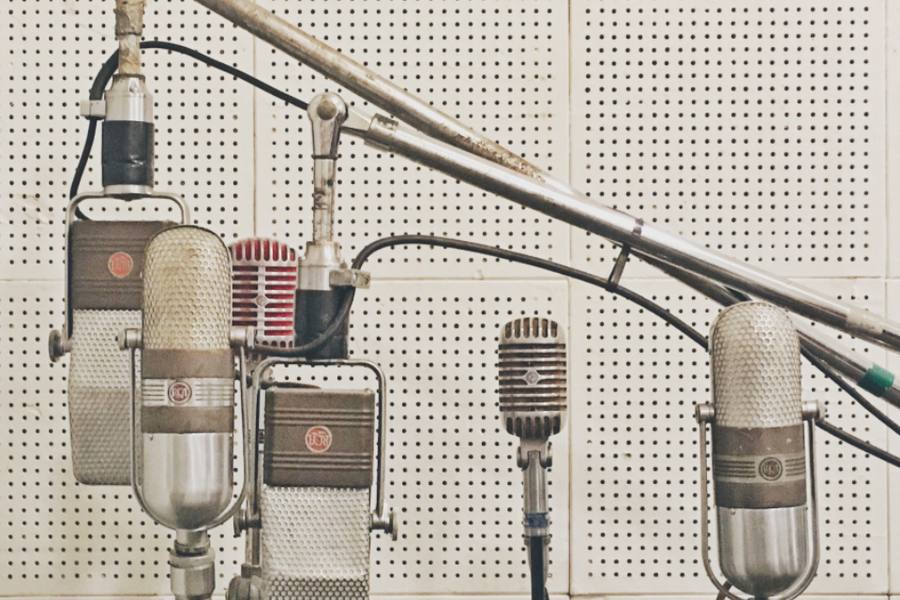
Shure SM7dB Microphone

Symbolbild (Stockfoto); nicht das abgebildete Produkt.
The Broadcast Standard And Its Historic Problem
The SM7 lineage is the microphone used in radio and podcasting more than any other, because a dynamic capsule with a tight pattern rejects room noise that a condenser would capture, and because it handles loud voices without distorting.
It has always had one significant practical problem: very low output. The original needs so much gain that cheap audio interfaces run out of clean gain before reaching a usable level, and the result is either a quiet recording or audible interface noise.
The usual solution was an external inline preamplifier, an extra box and an extra cost that surprised people. The SM7dB builds that preamplifier into the microphone, which removes the problem entirely and is the whole reason this version exists.
Why Dynamic For An Untreated Room
A condenser microphone is more sensitive and captures more detail, and in an untreated room it captures the refrigerator, the keyboard, the traffic and every reflection off a bare wall.
A dynamic microphone with a tight cardioid pattern hears mainly what is directly in front of it and rejects most of the rest. In a spare bedroom or a home office, that rejection matters far more than detail retrieval.
That is why broadcast studios, which are treated, still often use dynamics: the voice is close, the pattern is tight, and nothing else gets in. In an untreated room the argument is considerably stronger.
Close Mic Technique Is Not Optional
A dynamic microphone must be spoken into closely — within a hand's width — to sound full. At arm's length it sounds thin and distant, and this is the most common cause of disappointment.
Proximity effect means the closer you are, the more bass the microphone captures, which is why radio voices sound warm. Working close and using the bass rolloff switch if it becomes too heavy is the intended technique.
It also means a boom arm is effectively part of the purchase, because holding the correct distance consistently without one is impractical and a desk stand puts the microphone too low and picks up keyboard vibration.
Build And Practicalities
It is heavy, built of metal, with internal shock mounting and a substantial foam windscreen, and it is essentially indestructible. Broadcast studios keep these for decades.
It has switches for bass rolloff and presence boost, both of which are worth experimenting with rather than leaving at default, and a switch for the internal preamplifier gain.
It requires a microphone input with phantom power for the internal preamplifier, which is standard on any audio interface and is worth confirming rather than assuming.
Against The Alternatives
Against the original SM7B, this removes the need for an external preamplifier and costs more; the sound is otherwise the same and the convenience is substantial.
Against a USB condenser microphone, this needs an interface and sounds considerably better in an untreated room.
Against a cheaper dynamic microphone, the build, the pattern control and the broadcast pedigree are the differences.
The Verdict
The broadcast standard with its one genuine practical problem solved: a built-in preamplifier means a cheap interface no longer runs out of clean gain.
It still demands close mic technique and effectively requires a boom arm, and it needs an interface with phantom power.
Budget for a boom arm at the same time — holding the correct distance is what makes this microphone sound like a radio voice rather than a thin one.
Auf einen Blick
Vorteile
- Built-in preamplifier removes the low-output problem entirely
- Tight dynamic pattern rejects untreated room noise
- Handles loud voices without distorting
- Essentially indestructible; studios keep them for decades
Nachteile
- Requires close mic technique to sound full
- Boom arm is effectively part of the purchase
- Needs an interface with phantom power
- More expensive than the original version
Häufig gestellte Fragen
What problem does the built-in preamp solve?
The original needs so much gain that cheap interfaces run out of clean gain before reaching a usable level, producing either a quiet recording or audible interface noise. The internal preamp removes that entirely, along with the extra box people previously had to buy.
Why dynamic rather than condenser?
Because most home rooms are untreated. A condenser captures the refrigerator, the keyboard and every wall reflection along with your voice; a tight dynamic pattern hears mainly what is in front of it. Room rejection matters more at home than detail retrieval.
How close do I need to be?
Within a hand's width. At arm's length it sounds thin and distant, which is the commonest disappointment. A boom arm is effectively part of the purchase because holding that distance consistently otherwise is impractical.
Spezifikationen
| Type | Dynamic, cardioid |
| Preamplifier | Built in |
| Phantom power | Required for internal preamp |
| Switches | Bass rolloff, presence boost, preamp gain |
| Room rejection | Strong |
| Technique | Close mic, within a hand's width |
| Mounting | Boom arm strongly recommended |
| Durability | Decades |
Fazit
The broadcast standard with its low-output problem solved by an internal preamp. Still needs close technique and a boom arm — budget for both.
Preis auf Amazon prüfen